BEFRIENDING STRESS As a Path Home to Ourselves WEEK 4/6 What is Stress in THINKING, BELIEFS, MIND & EGO?
Apr 06, 2026
Welcome to Week 4!
A 6 Week Series on BEFRIENDING STRESS As a Path Home to Ourselves.
Throughout this 6 week Series I am inviting you to step off the comparison track and choose to enter into your own path of the Conscious Curriculum, in service of your healing and growth.
We will be focusing on more deeply understanding your unique Stress Response as a way of moving towards greater Stress Resilience & Self Leadership in the areas of your life that are most stubborn.
We are going to explore different ways you can meet, tend to, and befriend how Stress (or the sympathetic Fear Response) is the most common block to you actually slowing down, and acting into a place of inner alignment and personal power towards your most meaningful and value aligned goals.
In Week 1 we explored some of the most common blocks and how comparison can get us stuck before we even allow ourselves to start to listen, and learn from our stress response.
We also learned WHY stress is prevalent topic to draw our attention to in modern day life, across cultures and varying demographics.
In Week 2, we learned about stress on a fundamental level and how it functions in Physics, Mechanics, and Engineering. Including the impacts of excess stress, wear and tear, and breakdown.
Recently in Week 3, we explored Stress in the Human Body. A two part exploration into the History of Stress Research, and how Stress shows up in the Human Body. Meeting the Stress Response both in it's balanced state, and in Pt. 2, the impacts on our bodies when stress becomes Chronic.
If you want to revisit any of the prior series blogs, find the link to the beginning of the series HERE.
6 Week BEFRIENDING STRESS as a Path Home to Ourselves OVERVIEW:
Week 1 |
WHY CARE ABOUT STRESS?
Week 2 |
WHAT EXACTLY IS STRESS?
Week 3 |
Part 1
FOUNDING EXPERTS OF STRESS RESEARCH
WHAT IS HEALTHY STRESS RESPONSE IN THE HUMAN MINDBODY NERVOUS SYSTEM?
Part 2
WHAT IS UNHEALTHY CHRONIC STRESS IN THE HUMAN BODY?
Week 4 |
WHAT IS STRESS IN THINKING, BELIEFS, MIND, & EGO?
Week 5 |
WHAT IS STRESS IN BEHAVIOUR?
Week 6 |
WHERE DO WE GO FROM HERE?
8 L's of LIFE LEADERSHIP as A TOOLKIT for STRESS RESILIENCE.
TRANSFORMING DISTRESS into manageable and PURPOSE INSPIRED EUSTRESS.
Friendly Reminder:
Before we start, I want to recognize and honour that talking about stress in itself, can spark a stress response and potential fear, so my invitation is to enter this journey slowly from a place of genuine curiosity, and self compassion as a way of increasing AWARENESS.
Initially "parts" may feel overwhelmed, learning about the experience of stress. So please tend to your own system, and needs as you feel necessary. Return to the Blog when you feel you are in a regulated and balanced place and perspective.
AWARENESS is the FIRST step in giving us back our AUTONOMY to have a felt sense of CHOICE, and control over how to be with our Stress Response in new healthy, and helpful ways.
Disclaimer: This information is for general knowledge and should not be taken as medical advice. Please follow your own system, consult with a trained IFS Practitioner, or healthcare professional for specific conditions, symptoms and a personalized healing approach.
Welcome to Week 4!
This week we are going to explore together, What is Stress in our THINKING, BELIEFS, MIND & EGO?
In last weeks article we broke down the impacts of what an Imbalanced Sympathetic Stress Response stuck in the "ON" position can have when it becomes Chronic Stress. A contributor of that was identified as either an excess of demands, OR an Amygdala fear circuitry that as a result of past pain becomes uncalibrated with the reality of the present world threats, risks, dangers.
A part of us, and our Stress Response is over reacting to the situation, or circumstances.
So the question becomes, WHY?!
Why does our Stress response become uncalibrated, and hyper reactive?
Welcome to meeting our SUBJECTIVE LEARNING, MEMORIES, BELIEFS, MINDSET, & PERCEPTION.
In this weeks blog we are going to shed light on how our subconscious beliefs, thoughts, and thinking influence our stress response as a result of past experiences, learnings, and memories.
Let's start by exploring the natural formation of a healthy Mindset.
The Learning & Thinking Mind as a Survival Mechanism
The human brain, cognition, and the thinking mind at its root is a "survival organ”, a utilitarian tool shaped by natural selection to solve problems related to staying alive in unpredictable environments.
The Mind helps the individual/organism stay safe, and reach it's goals through the process of Learning. Using memories of past experiences to project an imagined scenario onto the present or future in which it can prepare for in prevention of, or support towards experiencing more of it's core needs.
The two primary types of learning in behavioural psychology are classical conditioning and operant conditioning.
1. Classical Conditioning (Associative Learning) Developed by Ivan Pavlov, this type of learning occurs when a neutral stimulus becomes associated with a meaningful stimulus, eventually triggering a conditioned response.
2. Operant Conditioning (Reward Learning) First introduced by B.F. Skinner, this type of learning involves modifying behaviour through reward reinforcement (strengthening behaviour) or consequences in punishment (decreasing behaviour).
We learn through our own lived first hand experience in doing, or through social observing the world around us.
Complex thinking evolved to conceptualize new tools, and technologies to advance civilization, manage social relationships, understand the intentions of others, and cooperate to gain advantages.
The brain developed the ability to conceptualize, imagine, simulate, and hypothesize potential future scenarios and outcomes through predictive forecasting.
If the mind can imagine accurate assumptions, and scenarios this can be helpful, and beneficial in preparation. In contrast, inaccurate, imbalanced, over thinking, turns to worrying, a future proofing attempt to control an unknowable experience which often becomes a large contributor to our modern day dysfunction in over adaptive thinking and chronic stress response.
While these cognitive traits served our ancestors well in the wild, they can be counterproductive in a vastly different modern life than our minds were originally designed, leading to anxiety, stress, or ruminating on hypothetical problems.
A major part of what buddhists label Human suffering, is not the pain we experience but the over adaptive thinking of the modern mind trying to control the moment in that it should be different than what it is.

Learning Fear as First Priority
The "default mode" of the human mind is to prioritize safety, survival and procreation, a trait inherited from our savanna ancestors who needed constant vigilance against predators, animals, and dangers.
This default to threat avoidance, led to a "negativity bias," where the mind first, and most importantly focuses on potential threats more than positive experiences.
Evolution and natural selection favoured the fear learning mind who over prepared, rather than left things to blind trust.
Rather than evolving to perceive absolute truth, the mind evolved with a bias to safety, to help organisms survive and reproduce, enabling them to navigate dangers, find food, and interact in social groups.
I like to say to myself; Stay curious how your current perspective is trying to keep you safe, rather than why this perspective is objective truth.
You will access a well of untapped insights into how your shadow is building invisible walls in keeping you stuck.
In theory it should be beneficial for us to take initial precaution of threat, risk, or danger, before interacting with a new food, drink or stranger.
The problem isn't the intent of the Stress Response as a function of fear learning.
The imbalance occurs in instances of past extreme pain, or repeated exposure to uncomfortable, or painful situations that amplify our emotional memories, and over influence our balanced Fear learning into Over adaption, irrationality, and unhelpful over activation of our thinking mind, and stress response.
Recalling last week's blog post on balanced and imbalanced Stress Response.
It is our subconscious mind (Mostly our Amygdala/ Hippocampus) that acts as a storehouse of emotional memories that our stress response is using as reference to interpret new stimuli, and best forecast how to move towards goals, cope with life, and navigate future unknowns, and potential challenges.
If these memories are charged, carry strong emotions/ feelings that a part of us really doesn't want to re experience, our stress response is likely to over estimate the risk of the present/future situation. It does this as a learned SAFE GUARD to protect against any potential of re experience the original discomfort.
This is a common experience in Anxiety, worry, and a general sense of dis ease, where our Nervous system's Nueroception (Amygdala & Threat detection system), become out of alignment with our most helpful and effective response.
Neuroplasticity and the ability to Change
The problem, *but also the opportunity for healing arises when we recognize that we internalized fear learning beliefs, but haven't "Revisited" them to update them as life changes, and we grow into adulthood.
A lot of our earliest memories of painful incidents, including attachment wounds, bullying, shame, and guilt come from our younger more vulnerable times of our life. It is not uncommon, that many of us are still running the same self protective fear learning subconscious programming later on in life shaping our relationship choices, career advancements, and entrepreneurial beliefs about creativity, abundance, and wealth creation.
Self Regulation, or Emotional Regulation, is the practice of rebalancing our emotional reactivity to life, to bring it into balance and appropriateness with the present moment situation. Not over intense, but also not under expressing either.
Helping us better cope with, manage, and be with uncomfortable or stressful experiences.
With time we develop a level of Emotional Intelligence to regulate our emotions and stress response in proportion, with the current moment demands. There is no objective level of regulation, but rather is the response chosen, the MOST HELPFUL for you in living into your most TRUE and INSPIRING LIFE.

BELIEFS, MINDSET, & PERCEPTION
Individual Parts of our Psyche, sometimes referred to as mental schemas remember fear learnings, or beliefs about the world, and assign certain strategies of how to manage, and cope with them.
We can use the metaphor of a Computer and it's Software to represent the human learning, and adaptive mind.

Microsoft or Apple Mac's run a particular Operating System, which could be synonymous with our inherited blueprint of genetic neural pathways from our biological parents.
Within that operating system, exists varies software programs or apps, that help run different functions of the system.
We can optimize existing programs by clearing our cache, or updating to the latest version.
We can also download and add new apps (applications), if we want to grow the utility of the system.
Our Parts within the human psyche operate like software programs, or apps that have been created to help effectively support us in navigating a complex modern world.
These parts carry programs or instruction manuals (known as Beliefs, If/Than rules) of how to habitually act when faced with certain situations and scenarios.
A collection of Software programs/apps form together to function as a specialized computer operating system.
A collection of Parts carrying Beliefs, become an individuals unique Belief System in an individual.
We hold many different beliefs, but in general our beliefs can be categorized into 3 Core Belief Buckets:
1. Beliefs about ourselves
Subjective set of beliefs about who we are as individuals.
2. Beliefs about others and the outside world
Trustworthiness of others. Beliefs about what others are like. Moral and ethical beliefs of what is right and wrong. Beliefs on Values, purpose and what is important. Religion, philosophy, and spiritual beliefs.
3. Bridge Beliefs about how the two interact
These beliefs often take the form of Instructive beliefs, of how to behave in relationship to the other, and outside world. Many of our parts coping strategy beliefs fall into this category.

1. Beliefs about ourselves
Personality is a combination of our
Inborn Temperament (Nature - Genetic Predisposition/ Inherited Traits)
and our
Character (Nurture - Learned, Conditioned, or Developed Qualities & Traits)
Studies on Human behaviour have proven majority of Personality traits are somewhere between 45-55 Percent split between Nature / Nurture.
Our subjective view, or meaning making of our unique Personality becomes our Ego / Identity.
I Created an Acronym labeled PERSON to express qualities that one may hold certain beliefs about oneself, that create a subjective EGO/ IDENTITY.
It's important to note our personality is who we are, our EGO / IDENTITY is the beliefs, and meaning making we layer on to the physical existence.
Recalling the earlier chapter on Negativity Bias, as a function of fear learning. Notice your current beliefs about yourself and see how the mind may be holding imbalanced negativity bias beliefs, or outdated stories about you.
PERSON as an acronym for exploring subjective beliefs/meaning making about oneself.
P - Physical traits/qualities (ie. Height weight, gender, place of origin, ethnicity)
E - Ego Subjective sense of Self esteem/Worth, skills and Abilities
R - Roles and Responsibilities (Work, Career)
S - Social Relationships (Father, Son, Grand daughter, Friend)
O - Organizations (Community associations)
N - Non Physical
It is through this Subjective Ego/Identity lens we project our ideas of reality, and make the majority of our CHOICES, actions, and behaviours from.
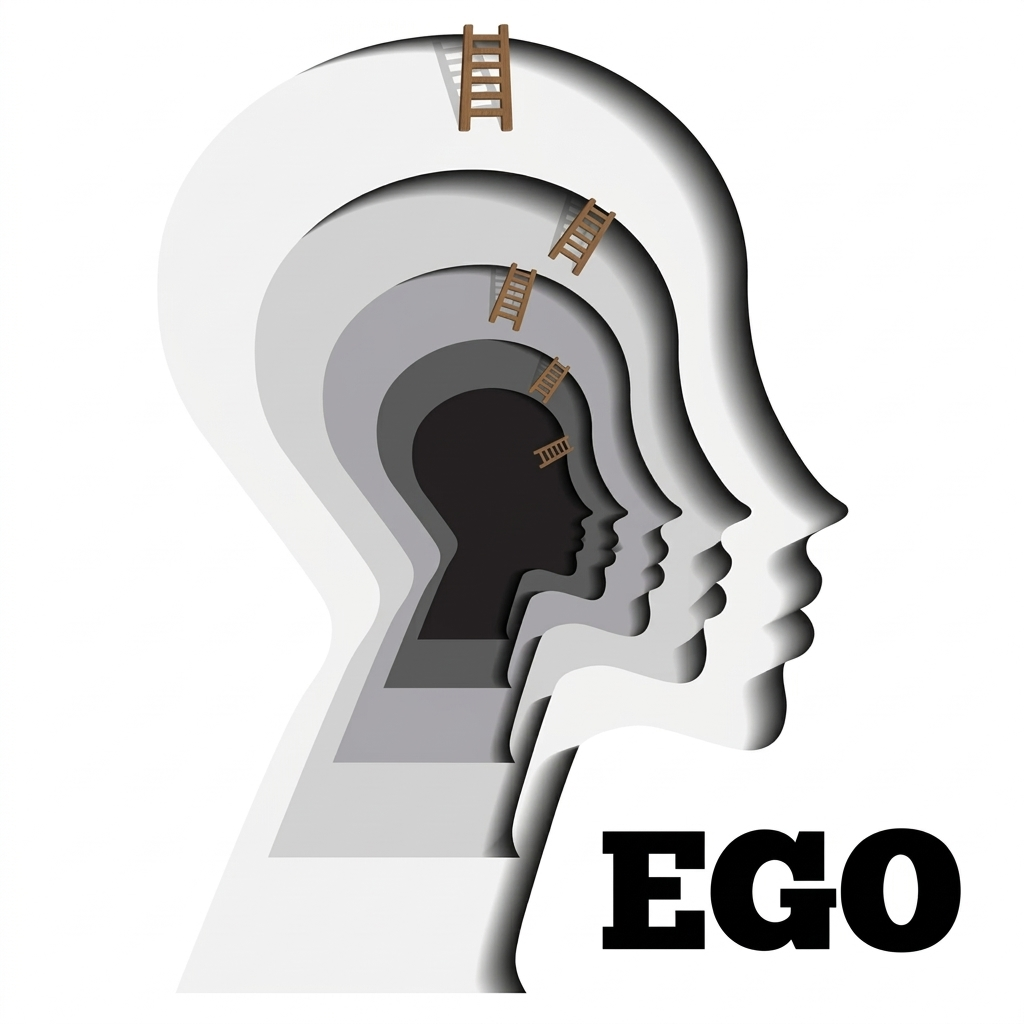
A lot of the work of deep healing and what we focus on in IFS PARTS Work and Heart set reprogramming is working with the layers of beliefs around Ego/Identity, as it is the filter in which we relate through, to engage with all life experiences in our world.
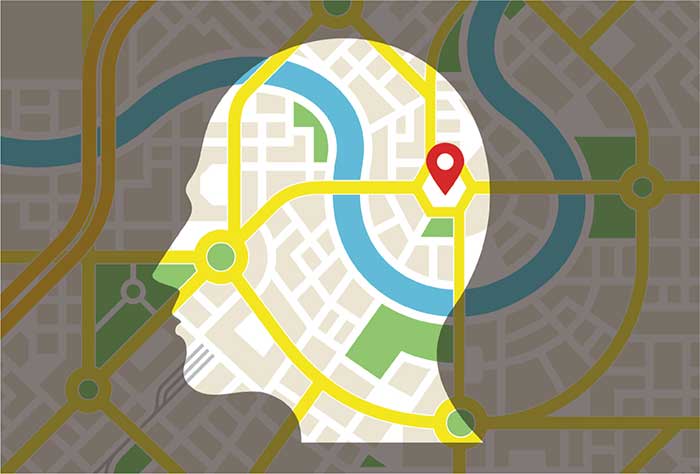
Together these beliefs create our belief system of how the world works.
This belief system becomes our subjective Mindset, a Mental map of the world, and the Perception in which we respond, react, and interact with the world through.
If these Parts/Programs are up to date, they will likely run the system smoothly, working collectively together as a system, and helpful map. Adapting with the best available programs (Behaviours / Coping strategies) to help us move towards our goals, and solve any problems at hand.

It's important to remember our Mental Map, is made up of subjective experiences, internalized memories and beliefs, and in turn creates a unique Perception, a coloured lens in which we view the world through.
No one individual is able to experience pure objective reality.
Our perception of reality is not exact reality, because we can only know reality through the limitations of our human senses, and our unique learned interpretations through personal experiences.
Beliefs can distort our perception of reality. Our parts in their best efforts to keep us safe, can influence how we see the world by colouring the experience in a shade similar to a past experience in turn changing how we interact with the present.

Parts work helps through working alongside our parts to understand, where we are carrying outdated beliefs and aims to support and help these parts that are just doing the best they know. We help them understand that we are in a different place now. We are different ourselves, and we are possibly experiencing a different present than what is being remembered.
Our subjective mental map, is not the territory.
But it is the closest interpretation we have available to orientate and help us navigate. Any map, is better than no map.
But what happens when we are trying to cope with our present moment life using an Outdated Map?
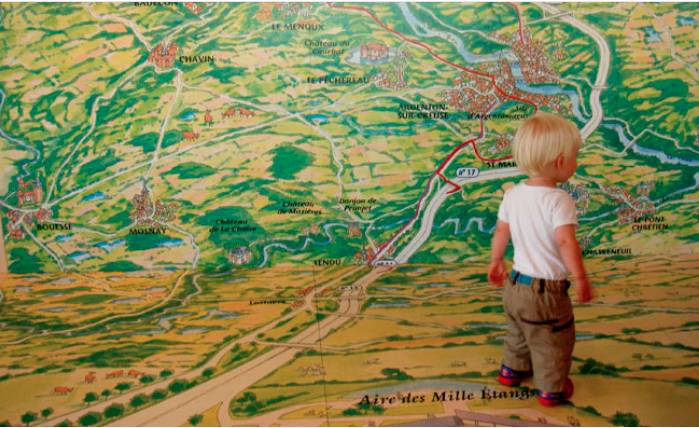
As a result of painful or traumatic experiences, our parts programs/apps can get stuck with outdated strategies. The software gets a glitch, app carries a bug and doesn't want to update. It's clinging to it's old ways and patterns. Some apps we become dependent on and rely on heavily.
Some other gifts/apps, are being under utilized, or maybe we don’t even know they are there.
The reason we get stuck in life, is we are using software programs and apps in which some of them are running outdated versions of their optimal functionality. In addition apps tend to fight over control of which program to run to optimize the system.

We don't need to necessarily delete apps, but rather update them to the latest version.
Help repurpose them to be functioning in their most optimal SELF LED/ REGULATED state, and working cohesively and collaboratively to meet the needs of present moment reality.
This is the power of parts work in which we reconnect to an Inner Leader that is able to held update and integrate our inner programming to it's present moment Capacity, and Full operational capabilities, while simultenously offering in as a central guiding energy to help our parts collaborate.
This offers new energy states, new thoughts, new perspectives, new actions and new opportunities!
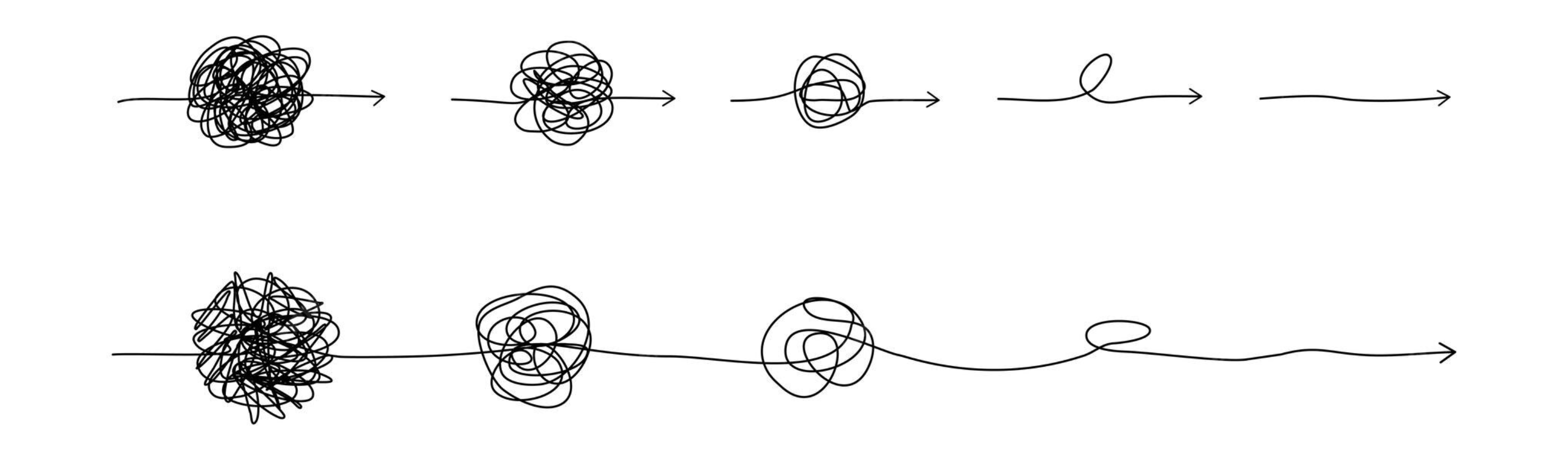

Nueroplasticity and Belief Reprogramming is Possible.
I am sharing this from a place of self learning in what is working to help me recover from a long journey of struggling with stress related sinus issues. I've come to understand in myself that the patterns that were keeping me in choices and actions leading to stress and burnout were coming from younger parts of me relying on strategies they learned long ago.
In befriending these parts through understanding and witnessing their experiences, they are much more willing to open up to more creative and collaborative solutions that also allow for my energy, and health to be included in the outcome.
Through out this article, we explored how Individual Parts, through adverse experiences can pick up fear learning strategies that contribute to shape our beliefs, mindset, self construct, and perception through which we see and interact with the world.
We can't force these programs to change, because these parts have internalized and downloaded their strategies in their best efforts to keep us safe, usually in a time that it was perceived as unsafe.
Until we can truely understand our parts, hear from them where they learned there strategy and what they need us to understand, witness, heal, and support them with. Will they be open to try on loosening their attachment to their strategy in hopes for a more balanced and collaborative approach.
The practice of becoming aware of, making conscious choices, and gradual and sustainable changes to support the balance of our parts outdated strategies is called SELF REGULATION.
Which is going to be the core concept explored later in this series through how the practice of SURRENDER, can support sustainable Self Regulation and Stress Resilience.
Congratulations! You made it to the end of Week 4.
If you are curious to learn what is possible in deepening your connection with stressed or over protective parts and what they may be struggling with. I welcome and encourage you to Schedule a 1on1 Discovery Call. We can hear from your parts and explore together in what they may be wanting support in.
Join Me Next Week!
For Week 5 of the Series BEFRIENDING STRESS As a Path Home to Ourselves.
Where we will explore.. What is Stress in BEHAVIOUR?
Grateful for you to be here.
Wishing ease, and calm for your week ahead.
Greg