BEFRIENDING STRESS As a Path Home to Ourselves WEEK 3/6 Balanced Stress in THE HUMAN BODY? PT.1
Mar 21, 2026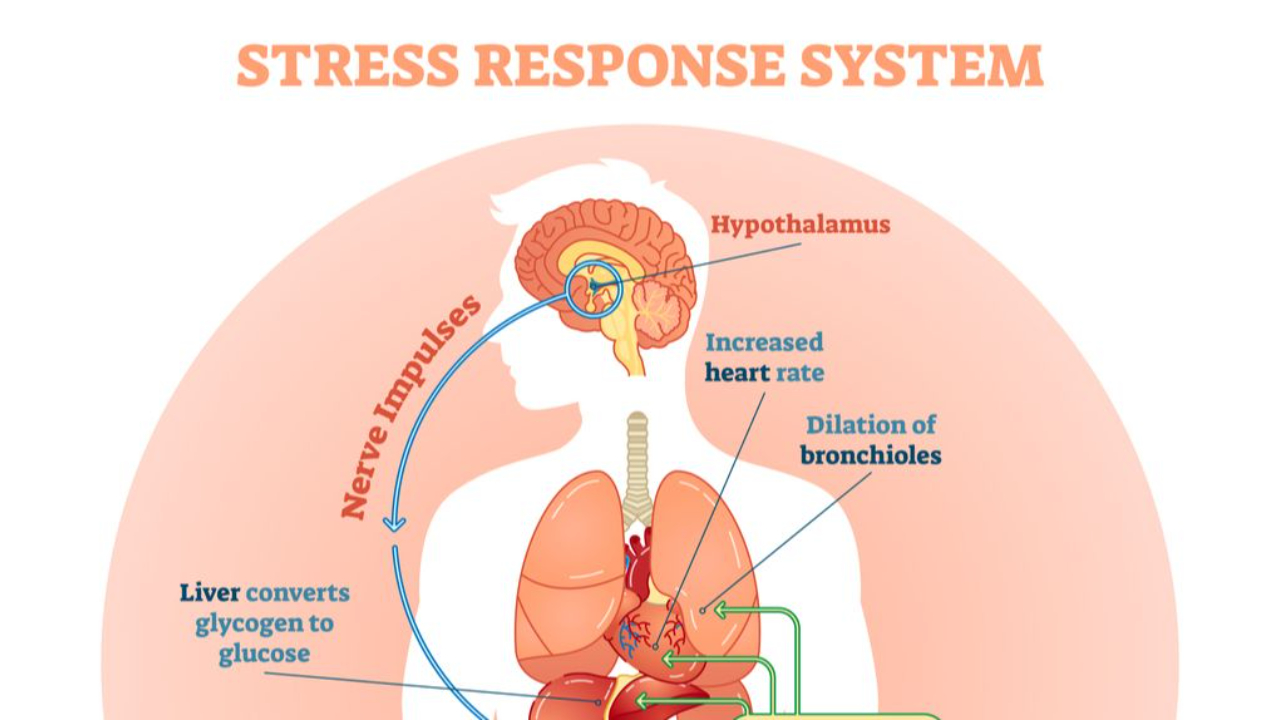
Welcome to Week 3!
A 6 Week Series on BEFRIENDING STRESS As a Path Home to Ourselves.
Throughout this 6 week Series I am inviting you to step off the comparison track and choose to enter onto your own path of the Conscious Curriculum, in service of your own healing and growth.
We will be focusing on more deeply UNDERSTANDING your unique STRESS RESPONSE as a way of moving towards greater Stress Resilience & Self Leadership in the areas of your life that are most stubborn.
We are going to explore different ways you can meet, tend to, and befriend how STRESS (or the sympathetic Fear Response) is the most common block to you actually slowing down, and acting into a place of inner alignment and personal power towards your most meaningful and value aligned goals.
In the first week we explored some of the most common blocks that can get us stuck before we even start to listen, and learn from our stress response.
We also learned WHY stress is prevalent topic to draw our attention to in modern day life.
In week 2, we learned about Stress on a fundamental level and how it functions in physics, mechanics, and engineering.
If you want to revisit any of the prior series blogs, find the link to the beginning of the series HERE.
6 Week BEFRIENDING STRESS as a Path Home to Ourselves OVERVIEW:
Week 1 |
WHY CARE ABOUT STRESS?
Week 2 |
WHAT EXACTLY IS STRESS?
Week 3 |
WHAT IS STRESS IN THE MINDBODY NERVOUS SYSTEM?
FOUNDING EXPERTS OF STRESS RESEARCH
WHAT IS HEALTHY ADAPTATION?
Week 4 |
WHAT IS STRESS IN THOUGHTS, THINKING, MIND, & EGO?
Week 5 |
WHAT IS STRESS IN BEHAVIOUR?
Week 6 |
WHERE DO WE GO FROM HERE?
8 L's of LIFE LEADERSHIP as A TOOLKIT for STRESS RESILIENCE.
TRANSFORMING DISTRESS into manageable and PURPOSE INSPIRED EUSTRESS.
Friendly Reminder:
Before we start, I want to recognize and honour that talking about stress in itself, can spark a stress response and potential fear, so my invitation is to enter this journey slowly from a place of genuine curiosity, and self compassion as a way of increasing AWARENESS.
Initially "parts" may feel overwhelmed, learning about the experience of stress. So please tend to your own system, and needs as you feel necessary. Return to the Blog when you feel you are in a regulated and balanced place and perspective.
AWARENESS is the FIRST step in giving us back our AUTONOMY to have a felt sense of CHOICE, and control over how to be with our Stress Response in new more healthy, and helpful ways.
Disclaimer: This information is for general knowledge and should not be taken as medical advice. Please follow your own system, or consult with a trained IFS Practitioner, or a healthcare professional for specific conditions, symptoms and a personalized healing approach.
Welcome to Week 3!
Now that we have explored the concept of Stress on a foundational level.
Let's shift our focus towards how Stress shows up in the Human body.
Week 3 | Stress Through the lens of the Human Body
Before we look at where we currently ARE in the field of Stress Research on the human body, and where we are potentially GOING in the future.
Let's start by looking at how FAR we have come..
Origin of Stress Research | Through the Lens of the Founding Field Experts
In appreciation to decades of in depth scientific research, we can stand on the shoulders of giants to really grasp and understand how the Stress Response (Internal Resistance), or Fear response sequentially get's triggered/activated, completes it's cycle, or in certain circumstances can get stuck in the "ON" position, in the face of a perceived stressor, threat, risk, or danger.
Starting from the beginning, we can introduce Claude Bernard.
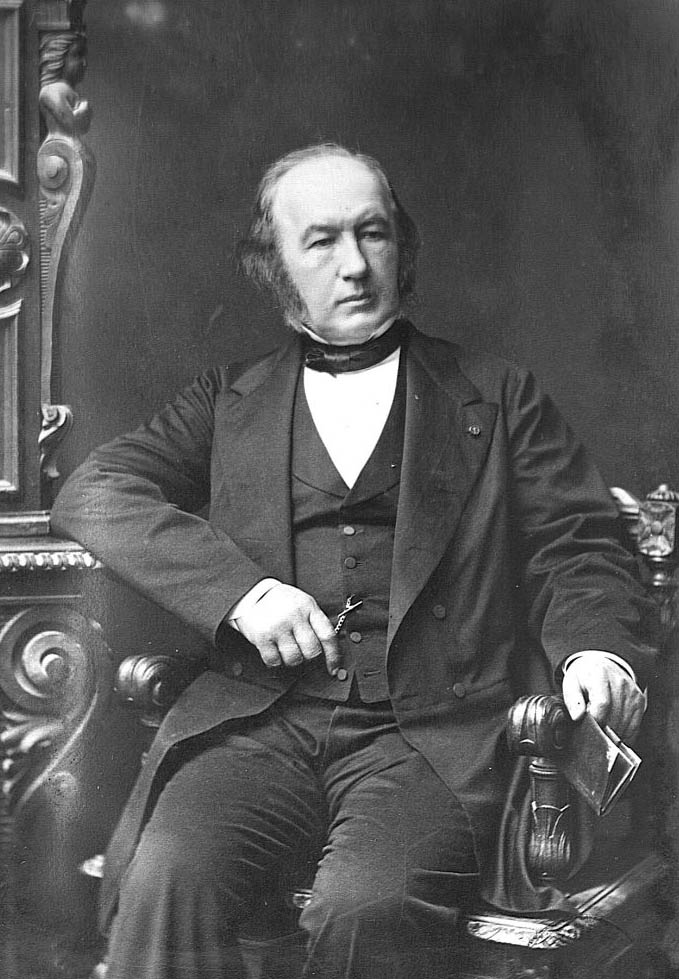
Claude Bernard (July 12, 1813 - Feb 10, 1878)
was a French physiologist, working out of the Faculty of Medicine in Paris.
Bernard was known primarily for his idea of Milieu intérieur, the "internal environment".
He explained that the body is "relatively independent" of the outside world, and that a healthy "internal environment" adapts to deficiencies in the surrounding environment, thus keeping the physiology balanced.
His research and discoveries concerning the concept of the internal environment "Milieu intérieur", led to the present understanding of homeostasis (a term coined by Walter Cannon.)—i.e., the self-governing of inner systems, or self regulation of vital processes.
Bernard's discoveries are as numerous as they are varied.
His research and experiments showed that ORGANS CAN HAVE MULTIPLE FUNCTIONS, one of which is secreting chemicals into the bloodstream to effect other organ systems.
Before Claude Bernard, it was thought that each organ had only one function. Through his research Bernard was able to show that the liver not only produced bile that poured into the digestive tract, but also secreted glucose into the blood.
Claude did not discover the first specific hormone (which was secretin in 1902), but he is generally credited with discovering the concept of internal secretion in the mid-1850s, which laid the foundation for endocrinology.
ROLE OF THE PANCREAS, SMALL INTESTINES, & NUTRIENT ABSORPTION
Bernard first major work was on the functions of the pancreas. His discovery that the juices (Now known as enzymes) of the pancreas play a significant role in the digestive process that won him the prize for experimental physiology from the French Academy of Sciences. Bernard showed that the principal processes of enzymes, bile, and the pancreas in digestion take place in the small intestine, not in the stomach as was previously believed.
LIVER, GLUCOSE BALANCE, & METABOLISM
Some say his best-known discovery is the glycogenic function of the liver. He demonstrated that the liver function, regulates blood sugar levels by both storing glycogen and secreting glucose, which was a pioneering study in metabolism, energy management, and internal regulation.
When glucose is in excess in the blood, the liver captures it and stores it as glycogen, a molecule discovered by C. Bernard. Conversely, when the blood is too low in glucose, the liver transforms its glycogen reserves into glucose, which it pours into the blood.
NERVES, BLOOD VESSELS, & BLOOD FLOW REGULATION
Examining the effects of isolating, or exciting certain parts of the cervical sympathetic nerve, resulted in different blood flow pressures in the head.
This discovery of the vasomotor system established the existence of both vasodilator and vasoconstrictor nerves, that assist in regulation of the blood supply under excitation.
EARLY ADVOCATE OF THE MODERN DAY SCIENTIFIC METHOD
On a broader stage, Bernard’s fundamental approach to experimental research played a role in establishing the principles of experimentation in the life sciences, evolving into the formal practice of the Scientific Method we use today.
He wrote, “It is what we think we already know that often prevents us from learning”, and “Theories can only be destroyed by new theories”.
He criticized scientists who cherry-picked their data only to prove their own hypotheses. Bernard’s historic role was to demonstrate the experimenter’s need for a guiding hypothesis to be either confirmed or refuted by the results.
Relying on Empirical method of research where discoveries were based on verifiable, and observable experience rather than theory or pure logic.
Unlike inductive reasoning, which makes broad generalizations from specific observations, deductive reasoning guarantees a conclusion based on presently undeniable, unfalsifiable or established facts.
In An Introduction to the Study of Experimental Medicine (1865), he emphasized the importance of trusting evidence over clout, even if it "contradicts a prevailing theory," as theories are only hypotheses" proven or disproven by facts.
“The complete scientist is one who embraces both theory and experimental practice”. - Claude Bernand
At the end of the 20th century, the acronym OPHERIC was used for this hypothetico-deductive approach:
1. We make an Observation which poses a Problem, that is to say, a question.
2. Then, we make a Hypothesis to solve this problem.
3. Then, we design and carry out an Experiment to invalidate or confirm this hypothesis.
4. The Results of this experiment are noted, and we Interpret these results and draw a Conclusion.
5. Of course, a discovery always opens new questions; this is how medical science always progresses today. Highlighting his humble approach to research and forward learning.
Claude Bernard summed up this symbiosis between thought and experimentation: “A skilled hand, without the head to direct it, is a blind instrument; the head without the realizing hand remains powerless.”
Bernard summarized his theory of medicine, and research in his book; Introduction à la médecine expérimentale (1865; An Introduction to the Study of Experimental Medicine).
Evolving on Bernard's original theory of "Milieu Intérieur", was researcher Walter Cannon.
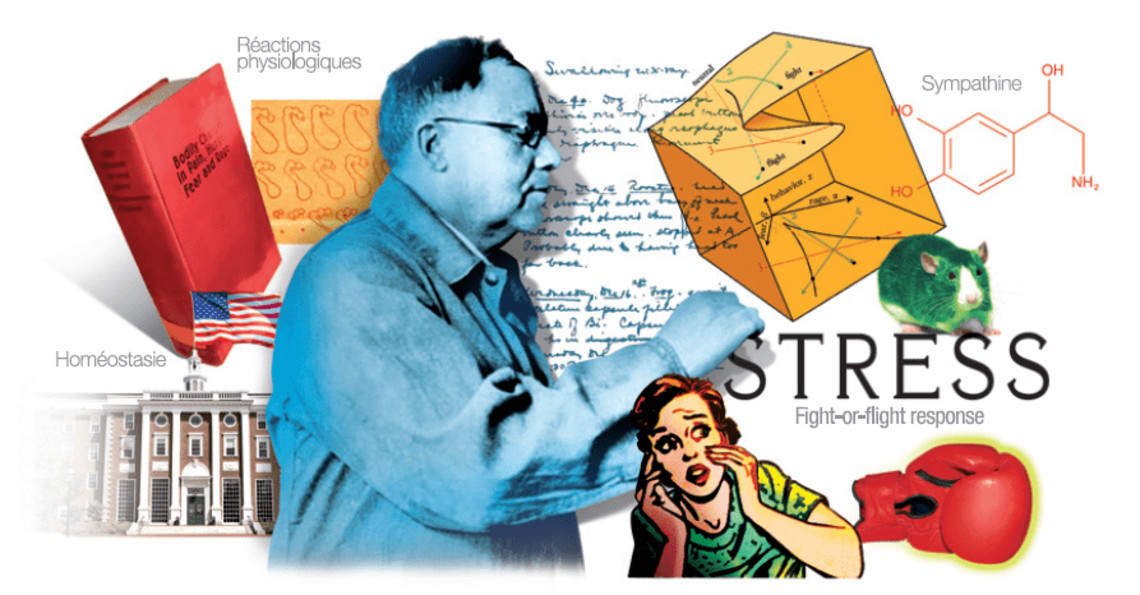
Walter Bradford Cannon, MD (October 19, 1871 – October 1, 1945)
Walter is known as the "godfather in the field of stress research.”
He was an American physiologist, professor and chairman of the Department of Physiology at Harvard Medical School. He coined the term "fight or flight response", and developed the theory of homeostasis.
Walter Cannon began his career in science as a Harvard undergraduate in the year 1892, working along side Henry Bowditch, who had worked with Claude Bernard, and directed the laboratory in physiology at Harvard.
Cannon's research, experimentations, and findings include…
FIGHT OR FLIGHT
In 1915, Cannon coined the term "fight or flight", to describe an animal's response to threats of bodily changes of Pain.
He asserted that not only physical emergencies, such as blood loss from trauma but also psychological emergencies, such as antagonistic social encounters between members of the same species, evoke the release of adrenaline into the bloodstream.
Cannon research highlighted the importance of adrenaline, and it's effects on different body organs, all of which aim to optimize energy management, and return the organism to balanced homeostasis after threatening situations.
ADRENALINE, & THE SYMPATHOADRENAL SYSTEM
In the 1930's, Cannon proposed the existence and functional unity of the sympathoadrenal system. He theorized that the sympathetic nervous system and the adrenal gland work together using the same chemical messenger "Adrenaline", as a unit to maintain homeostasis in emergencies.
Through questionable experimentation on animals, Cannon would modify the electrical nerves supplying the heart, and in other instances modifying the adrenal glands supplying hormones to the heart. Cannon was able to deduce that if the heart rate increases without the nerve impulses it could be concluded that increased heart rate must have resulted from the actions on the heart from the adrenal system hormones.
Moreover, the amount of increase in the heart rate, provided a measure of the amount of adrenaline hormone released.
Cannon’s notion of a unitary sympathoadrenal system persists to this day.
HOMEOSTASIS
Building on the earlier idea of Claude Bernard of milieu, Cannon developed the concept of homeostasis, the bodies natural inclination to adapt to ones surroundings in efforts to return to a state of balance. Some bodily states that Cannon was measuring was glucose concentrations, body temperature, and acid-base balance. He concluded, the regulating system that determines the homeostatic state consists of many cooperating mechanisms acting simultaneously or successively. Homeostasis does not occur by chance, but is the result of organized self-government.
Cannon popularized his theories in his book The Wisdom of the Body, first published in 1932.
was later published in the year of his death. This book serves as an autobiography and a reflection on Cannon scientific philosophy.
Next we'll meet Hans Selye, who continued to advance the field of stress research including experiments and discoveries on the impacts of chronic stress on our health.

Hans Selye, MD (January 26, 1907 – October 16, 1982)
was a Hungarian-Canadian, and pioneering endocrinologist who became known as the "Father of Stress Research".
At the age of 27, Hans became Assistant Professor of Biochemistry at McGill University. Later working as a professor and director of the Institute of Experimental Medicine and Surgery at the Université de Montréal.
Selye acknowledged the influence of predecessors Claude Bernard, and Walter Cannon.
Selye's research, experimentations and findings were vast and provided further evidence on the following..
ACUTE VS CHRONIC STRESS (Impacts on Health and Disease)
His primary contributions included expanding on Cannon's description of acute stress response of "flight or flight", to an understanding of the chronic, or prolonged effects of the Stress response system on the organism.
Selye, experimented by placing the rats in various stressful situations, inclement weather, or under extreme physical demand. What he noticed was a consistent failure of similar biological systems.
He identified a "stress triad" associated with this syndrome: enlarged adrenal glands (adrenal hyperactivity), shrunken thymus/lymph structures (lymphatic atrophy), and peptic stomach ulcers.
Selye recognized that his discovery was an expression of Claude Bernard’s milieu intérieur and homeostasis at work. The organism fighting to regain homeostasis, and yet self damaging through it's attempts.
He termed this latter condition and impact of prolonged stress, ‘General adaptation syndrome’, which is also known in the literature as Selye’s Syndrome.
GENERAL ADAPTION SYNDROME (GAS)
Stress is more than just in the mind.
Selye deduced that stress is a choreographed state of events, not a mere psychological term, and is encountered by all individuals during a period of prolonged stress and demand.
Unlike acute stress responses (like sudden danger), GA syndrome outlines the body's long-term, chronic reaction to ongoing pressure.
Diseases of Adaptation
Selye suggested that if the resistance stage lasts too long, it causes "diseases of adaptation," including high blood pressure, heart disease, and mental health issues.
Selye established that the body responds to diverse stressors (cold, injury, fatigue) through a consistent, three-phase mechanism:
Alarm Reaction Stage: The initial, immediate "fight-or-flight" response, where the body recognizes a stressor and prepares for defence by releasing stress hormones like adrenaline and cortisol.
Resistance Stage: The body attempts to adapt to the ongoing stressor. If the stressor continues, the body attempts to adapt and repair itself, remaining on high alert while normalizing heart rate and blood pressure, but still producing higher-than-normal levels of stress hormones.
Exhaustion Stage: A pathological state from ongoing, unrelieved stress. Following prolonged or chronic stress, the body's resources are depleted. The immune and nervous systems can no longer function normally, which can lead to illnesses, physical exhaustion, severe burnout, illness or death.
HYPOTHALAMIC- PITUITARY- ADRENAL SYSTEM (HPA AXIS)
Selye was the first to link the sympathetic system whereby the body copes with stress, is through the hypothalamic-pituitary-adrenal axis (HPA axis) system.
The release of neurotransmitters from the central and sympathetic nervous systems, as well as hormones from the Hypothalamus, pituitary, adrenal and other endocrine glands, mediate the response in acute/ and chronic stress.
Selye’s proposal stipulated that stress was present in an individual throughout the entire period of exposure to a nonspecific demand.
STRESS IMPACT ON HEALTH & DISEASE
Diseases of Adaptation.
Selye was the first scientist to identify STRESS, as underpinning the "nonspecific signs and symptoms of illness."
Selye argued that many diseases, such as high blood pressure and, gastric ulcers, are not caused by the stressor itself, but by the body's maladaptive attempts in response to it.
Where prolonged stress or internal resistance itself, can become a NEW STRESSOR to the body, contributing to dysfunction and imbalance. Posing the curiosity and question that sometimes our MINDBODY's resistance to an event, can be more damaging then the original pain of the event itself.
Selye's research laid the groundwork for modern understanding of how environmental and psychological pressures affect physical health.
DISTRESS (NEGATIVE STRESS) and EUSTRESS (POSITIVE STRESS)
In the mid 1975's, Selye was the first to differentiate between "Eustress" (positive, motivating stress) and "Distress" (negative, harmful stress).
Combining the Greek prefix eu- (meaning "good") with stress, to describe positive, motivating, and beneficial stress that helps people grow, feel fulfilled, and improve performance. The interest of Post traumatic growth, in how people can get stronger out of adverse experiences, evolved out of this idea.
He argued that stress differs from other physical, emotional responses in that it is identical whether the provoking impulse is positive or negative.
Selye's view on work was deeply founded on purpose. Work was never work for Selye; in this regard, he has been compared to Thomas Edison, who saw work not as labour but as leisure.
Selye actually transformed his home, a brick house built across the McGill University campus, into the International Institute of Stress, where he planned some of his experiments.
His relentless work ethic was evident in his publications, which numbered more than 1,600 scientific articles and 39 books.
His 1936 Nature paper introduced the concept of biological stress to modern medicine. Additional major publications include:
The Stress of Life (1956, revised ed. 1976): His seminal work, written for both professionals and the general public, explaining the concept of stress.
Stress without Distress (1974): A highly popular book offering practical advice on managing stress, focusing on using stress for personal growth.
Selye's Guide to Stress Research (1980): A compilation of research findings on the physiological responses to stress.
From Dream to Discovery: On Being a Scientist (1964): A book describing his life as a researcher and his approach to scientific discovery.
Stress of My Life: A Scientist's Memoirs (1977, 2nd ed. 1979): His autobiography, chronicling his career and the development of the stress theory.
In 1975, he founded the International Institute of Stress, and created the Hans Selye Foundation. Later Selye and eight Nobel laureates founded the Canadian Institute of Stress.
Advancing Stress Research, through the 20th Century, Peter Sterling, brilliantly modernized Walter Cannon's homeostasis theory, into Allostasis
Peter Sterling, PhD (Born June 28, 1940)
is an American anatomist, and neuroscientist and was appointed Professor of Neuroscience at the University of Pennsylvania School of Medicine in 1980.
His work spans from the Microscopic (Studying the brain's synaptic connections), to the Macroscopic (Studying human/social behaviour).
Peter developed frameworks for understanding how the brain predicts and manages physical needs.
ALLOSTASIS THEORY
In 1988, Together with Joseph Eyer, Peter Sterling coined the term “ALLOSTASIS”, the bodies constant adaptation process, seeking stability through change.
Allostasis is the body’s adaptive response, and natural ability to ramp up or down, the body’s energy supply, and mobilize internal resources to meet the demands, and stressors of life.
"Allostasis Theory" describes how the brain orchestrates adaptations across multiple systems to minimize errors and optimize survival. The flexible, and dynamic biological processes by which a MINDBODY system constantly responds, and adapts to stressors in order to regain, re establish, maintain, and balance towards homeostasis.
Homeostasis is like a thermostat, keeping things steady.
Allostasis is more dynamic, recognizing that stability requires change and flexibility in response to the environment.
Allostasis works through regulating our autonomic nervous system through micro adjustments of internal functions (Including changes in Heart rate, Temperature, and various chain reaction chemical and hormonal releases) to meet demands, rather than just maintaining a fixed set point.
In times of demand, Allostasis works to activate our Sympathetic Stress/Fear response (Fight or Flight/Flee response).
In times of safety, Allostasis works to down regulate through our Parasympathetic nervous system (Rest and relax state).
Fluctuating on a ongoing continuum to balance our Energy/Activation, and Rest, Recovery and Reserves needs, returning these internal organ systems to a healthy baseline responsiveness (Allostasis) and optimal functioning when the stressor has passed.
Known for his research on brain architecture and the concept of allostasis, he has published significant work on health, depression, and neural design.
Sterling is the author of What Is Health? Allostasis and the Evolution of Human Design (2020).
Where he explains his view of health as the capacity for "adaptive variation", and disease as the shrinkage of that capacity.
Sterling's views align with a WHOLISTIC, and SYSTEMIC VIEW OF HEALING THE COLLECTIVE.
An emerging argument in modern health sciences posits that health is optimal responsiveness—the ability of an organism to adapt to environmental, physiological, and emotional stressors,
and that treating these imbalances and conditions is best achieved at the system level, rather than focusing solely on individual organs or symptoms.
This approach moves beyond reactive, disease-specific interventions to a holistic view where health is maintained by the dynamic, coordinated interaction of molecular, cellular, and environmental networks.
Partnering with Peter Sterlings, in the advancements of Stress on Health and Disease is Bruce McEwen and associates.
Bruce McEwen, PhD (January 17, 1938 – January 2, 2020)
was an American neuroendocrinologist and head of the Harold and Margaret Milliken Hatch Laboratory of Neuroendocrinology at Rockefeller University.
His research focused on how stress hormones (glucocorticoids) affect brain structure and function, and neuronal degeneration, particularly in the hippocampus.
ALLOSTATIC LOAD
Bruce McEwen & Peter Sterling are key figures in the development of allostasis and allostatic load theory, which explains how the brain and body maintain stability through change, and left unmanaged in the long-term, contribute to the damaging effects of chronic stress. Their focus is on the specific biological costs of imbalanced, prolonged, chronic, and dysregulated adaptation.
Their work bridges neuroscience, psychology, and epidemiology to understand how psychological, social and environmental factors affect physical health.
In the early 1990s, known for his work on the effects of environmental and psychological stress, Bruce and his team built upon Peter's idea of Allostasis, developing the concept of ALLOSTATIC LOAD,
The argument that while allostasis (maintaining stability through change) is adaptive, the persistent, chronic activation of these systems causes long-term damage (allostatic load).
Allostatic load, refers to the "wear and tear" the strain the body experiences from chronic, repeated activation of the Stress Response.
Their joint work emphasizes that the brain is the main organ of stress, interpreting environmental cues and triggering responses, and that misinterpreting non life threatening stressors can lead to disorders like hypertension, immune dysfunction, and cognitive decline if maintained for too long.
McEwen was a former president of the Society for Neuroscience and was a member of the National Academy of Sciences, the American Academy of Arts and Sciences and the National Academy of Medicine.
McEwen published his first paper in 1959, and eventually published more than 700 peer-reviewed articles in journals including Nature, JAMA: The Journal of the American Medical Association, The New England Journal of Medicine, Neurobiology of Aging and The Journal of Neuroscience.
Bruce Co-authored several books including:
The End of Stress as We know it (2002) with Elizabeth Lasley, this book introduces the concept of "allostatic load"—the cumulative "wear and tear" on the body and brain caused by chronic stress.
The Hostage brain (1994) with Harold M. Schmeck Jr., it describes how the brain is vulnerable to both internal hormonal changes and external environmental forces.
McEwen's notable doctoral students include Robert Sapolsky, Catherine Woolley, and Heather Cameron, and Elizabeth Gould.
Next, we'll meet the passionate Psychologist, Stephen Porges, who was deeply interested in how the stress response influenced mental health and overall wellbeing.
Stephen W. Porges, Phd (born 1945)
is an American psychologist, and currently the Professor of Psychiatry at the University of North Carolina at Chapel Hill.
Porges is also currently the Director of the Kinsey Institute Traumatic Stress Research Consortium at Indiana University Bloomington, which studies trauma.
He served as president of the Society for Psychophysiological Research (1993-1994), and the Federation of Associations in Behavioural & Brain Sciences (1999-2002).
POLYVAGAL THEORY
In 1994, Porges developed and proposed one of the most commonly used theories on Stress Responsiveness in present day.
It is a trans-disciplinary synthesis weaving together evolutionary biology, neurophysiology, observable behaviour, with clinical insights into a framework for understanding how our nervous system states drive our behaviour in the modern world and with one another.
This model updates and builds on prior conceptualizations predicated on the notion of the body's need for homeostasis, allostasis, and autonomic balance.
Polyvagal Theory, a systems-level, pathway-specific framework of autonomic regulation of the stress response.
It attempts to explain how the autonomic nervous system (ANS), regulates behavioural and emotional states through a three-tiered hierarchy based on evolutionary development.
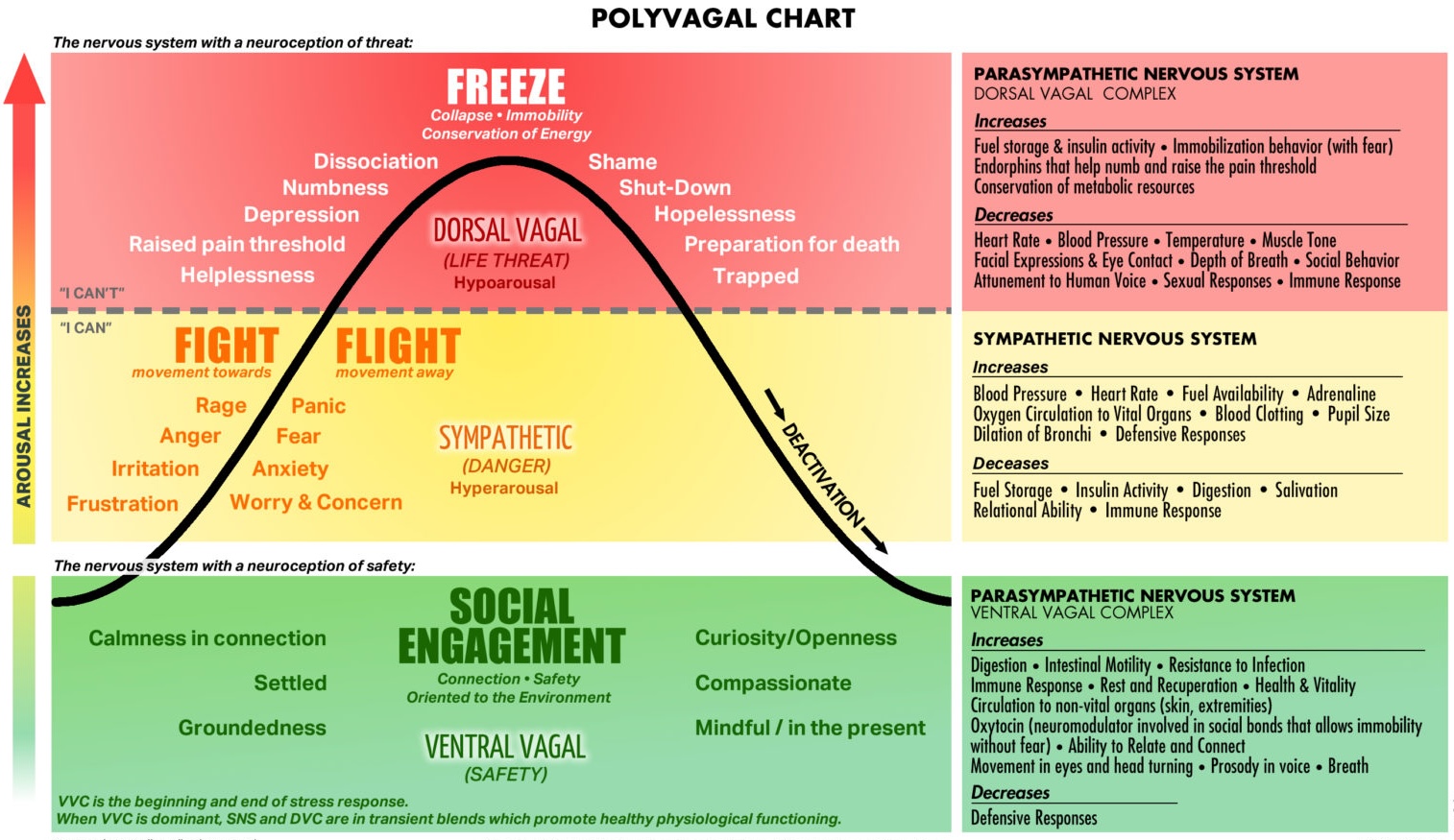
Steven proposes that the nervous system responds to stress in a specific order, and Three-Tiered Hierarchy:
Ventral Vagal Complex (Social Engagement): The newest system. When safe, it promotes calmness, connection, and "rest and digest" functions.
Sympathetic Nervous System (Fight-or-Flight): Activates when danger is detected, increasing heart rate and mobilization.
Dorsal Vagal Complex (Shutdown): The oldest system. Activated during extreme danger, leading to immobilization, freezing, or fainting.
Alongside the Sympathetic Stress Response, Polyvagal Theory distinguishes two core vagal systems, with differentiated vagal efferent pathways, and regulatory roles to maintain allostasis.
The two efferent (motor) pathways of the Polyvagal theory, which modulate cardiac output and visceral states are the ventral vagal pathway (The "Smart Vagus" Promotes social engagement, communication, and emotional regulation.) and the Dorsal Vagal Pathway (The "Vegetative Vagus" Shutdown Response, when the organism exhausts it's adaptive capacity and prepares for self preservation as last efforts to escape and avoid death.)
NUEROCEPTION
Porges coined the term "Neuroception", as the subconscious mind, alongside the vagus nerve's role in detecting and predicting safety or threat, to promote specific adaptive responses (social engagement, fight-or-flight, or shutdown.)
Neuroception: The unconscious, reflexive detection of environmental cues (safety, danger, or life-threat) that dictates which autonomic state is activated. Safety (Ventral State) or Danger (Sympathetic, or Dorsal State).
WINDOW OF TOLERANCE
Dr. Dan Siegal (with his focus on secure attachment and interpersonal neurobiology), and Dr. Stephen Porges have worked together collaborating on the neuroscience of trauma, nervous system regulation, and interpersonal neurobiology. They are both leading figures in relational neuroscience, often appearing together in educational seminars and workshops to discuss how the "Window of Tolerance" (Siegel) and Polyvagal Theory (Porges) integrate to improve mental health and psychotherapy.
The Window of Tolerance describes the OPTIMAL AROUSAL ZONE (Flow State) where individuals feel self regulated, have emotional flexibility and can effectively manage emotions, think clearly, and act from a grounded and confident place.
This VENTRAL VAGAL PARASYMPATHETIC NERVOUS SYSTEM (Social Engagement state) is largely governed by the access to the "brake function" of the VAGUS NERVE, as explained in Polyvagal Theory.
When faced with stress, it is common for people to get pulled out of this zone, into one of two states, either:
Over expressive HYPERAROUSAL - SYMPATHETIC NERVOUS SYSTEM (Fight, Flight/Flee, or Fawn)
Gas pedal of Energy/Arousal/Activation is Stuck in the "ON/GO" position. Too much energy, leading to busyness of thoughts, irritability, anxiety, anger, panic or urgency.
or
Over passive/submissive HYPOAROUSAL - DORSAL VAGAL PARASYMPATHETIC NERVOUS SYSTEM (Freeze/Flop)
Too Little Energy, leading to numbing, depression, or shutting down.
Exhausted, disconnected, or dissociated from ones healthy Energy/Arousal/Activation system.
TRAUMA & DYSREGULATION
Trauma, pain, and ACE (Adverse Childhood Experiences) can have an impact on the Window of tolerance. A hyper sensitive amygdala pathway creates an early trip wire, and shrinks our felt capacity to hold flexibility with our emotions. Our tendency, and susceptibility to get emotionally triggered, and over react in one of the common Fear Responses can get activated more easily based on our past experiences.
REGULATION & CO REGULATION
Listening to our Life (Non judgementally Noticing of our stress response across different experiences and circumstances).
Learning and deepening our self understanding about our Stress Response and reactive patterns.
Love, Feel, & Heal is a process of moving towards compassionate witnessing of how and when we learned these patterns. With time growing our capacity to be with them.
Letting Go is a process of feeling a renewed sense of acceptance, forgiveness, and capacity to move on, seeing the next moment from a new state of possibility.
Finally a few modern day Experts, actively working to advance the field of Stress Research and support more social awareness of how we can better cope with and even thrive in relationship to our Stress Response.
I am thankful for these researches and authors, who's books have helped me deepen my understanding and relationship to my own stress, as well as garnish a wider perspective on the impacts of stress on a collective Bio/Psycho/Social level.
Robert M. Sapolsky (Primtologist & Nueroscientist) Author of Why Zebras Don't get Ulcers | A guide to stress, stress related disease, and coping
Jessica Mcguire Author of the Nervous System Reset, Founder of the Vagus Nerve Program and Nervous System Regulation Certification Course
Gabor Mate MD (Trauma Specialist) Author of When the Body says No | The cost of Hidden Stress, and Myth of Normal | Trauma, Illness, & healing in a toxic culture
Mo Gawdat & Alice Law Author of Unstressable | A practical guide to Stress Free Living
Emily & Amelia Nagoski PhD Author of Burnout | The Secret to Unlocking the Stress Cycle
Now that we have explored Stress understanding through some of the founding field Experts;
Let's Dive into how the SYMPATHETIC STRESS RESPONSE shows up on a day to day Nervous System level in the HUMAN BODY.
STRESS IN THE HUMAN BODY
What is STRESS RESPONSE in the HUMAN BODY?
I have found it most helpful to understand stress by initially zooming out and looking at the human organism and nervous system as a whole.
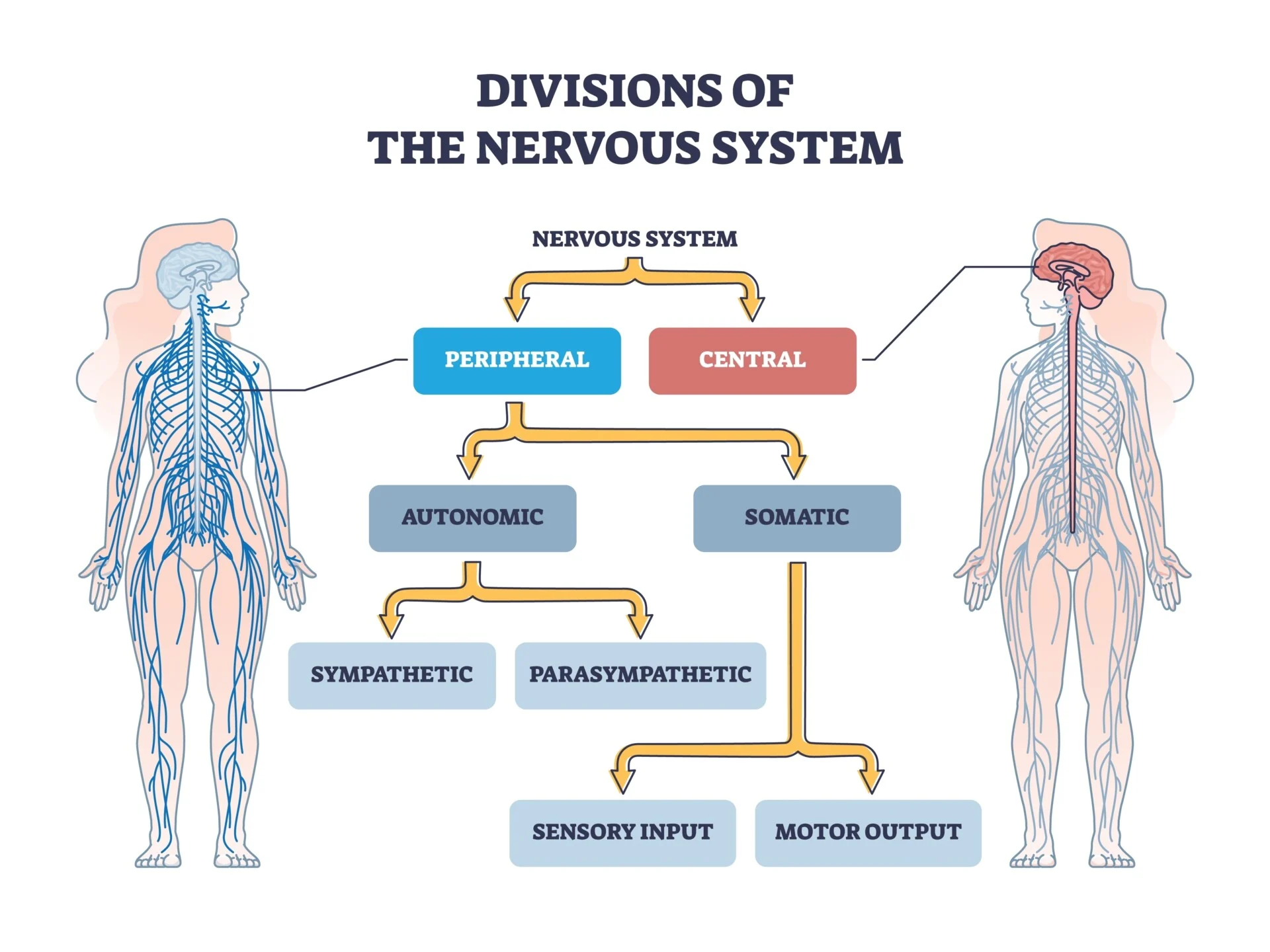
HUMAN BEING NERVOUS SYSTEM OVERVIEW
This Diagram shows a helpful depiction of the main branches of the Human Nervous system.
The Central Nervous System - Includes the Brain and the Main Spinal Cord of nerves that run through the spine. Together the Skull and Spinal Column act as a shield of armour to protect our precious central Nervous system.
The Peripheral Nervous System - Consists of the collective of two way auxilary nerves that transmit information to our limbs, organs, and tissue as well as act as receivers collecting information of our inner and outter environment to send signals back to our Central nervous System for processing.
The Peripheral Nervous System is further divided into two branches, with the primary differentiator based on the degree of conscious control we have over them.
Voluntary (Somatic Nervous System)
The parts of our body that operate as a result of our conscious control.
The Somatic Nervous system is involved with coordination of conscious perception of sensory input, voluntary control and chosen actions/muscle movements.
This is the part of our nervous system we are most familiar with as we engage, and rely on it for accomplishing our tasks, and activities on a day to day basis.
InVoluntary (Autonomic Nervous System)
The part of the body that operates underneath conscious control.
The lesser aware collective of parts within us, including all the actions that are taking place within the individual organism "BEHIND THE SCENES." The deeply evolutionary, genetic programming, biological functions, and habitual learnings in what the organism relies on to keep it alive, and meet it's core needs.
This set of nerves and corresponding functions operate behind the scenes. They help to maintain internal allostasis and equilibrium through regulating and coordinating vital internal functions like heart rate, breathing, digestion, blood circulation, excretion, and the secretion of various hormones without requiring your conscious thought.
The Involuntary and often unconscious Autonomic Nervous System in turn is divided into two complimentary branches that support us in meeting our external world demands and recovery:
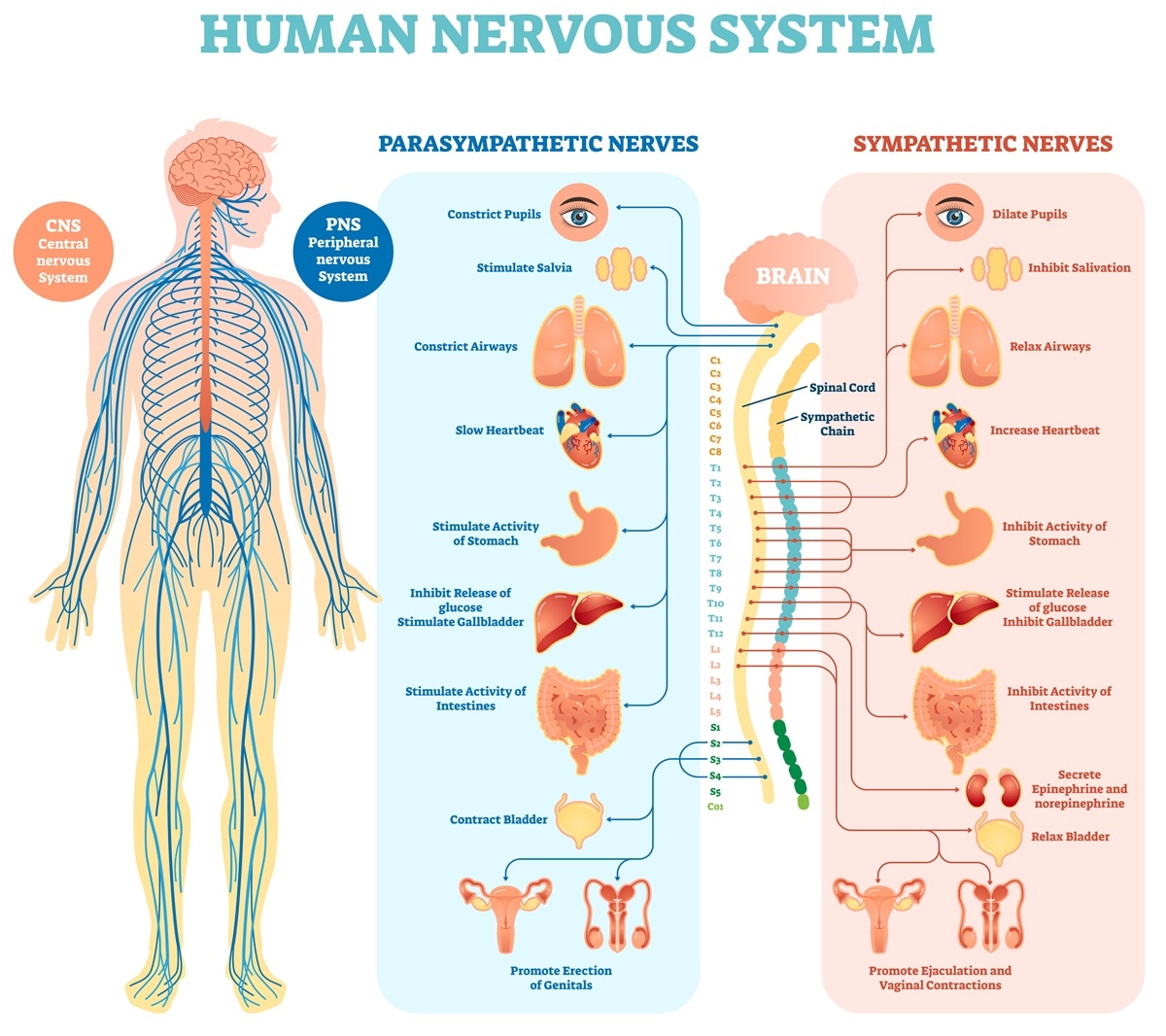
Sympathetic Nervous System controls our Activation/Engagement/Doing/Change Energy. Commonly referred to as our Fear (fight-or-flight) Response. It is our "Gas pedal, ON, or GO Switch".
The Sympathetic Nervous system is recognized as the part of the nervous system involved with our species uniquely evolved ADAPTATION capabilities. (the ability for an organism to readily and appropriately react, respond, engage with, and adapt to it’s environment).
Our Stress response can be thought of as the Internal RESISTANCE we create to any External Force/STRESSOR trying to pull us out of balance.
The SNS organizes around and encapsulates any and all, motivations to do, act, or change towards pleasure seeking, or pain avoidance, goal-directed behaviour.
The Sympathetic nervous system is our STRESS RESPONSE.
This system acts through hightening arousal, alertness, increasing heart rate, respiration, glucose production, and blood pressure, in efforts of energy mobilization in the face of a perceived stressor, or during times of exertion or external demand.
on the other end of the spectrum of the state of our ANS is our,
Parasympathetic Nervous System which controls the "rest-and-digest" response.
The parasympathetic nervous system is focused on returning the organism to homeostasis/allostasis. It does so through promoting systems of repair, recovery, healing, immunity, regulation and optimization of all major organ systems and processes.
Slowing heart rate, lowering blood pressure, and aiding digestion and nutrient absorption, relaxation, immunity, reproductive functions, muscle recovery and anabolic growth, and replenishment of reserve energy.
In addition, a third Branch of the Autonomic Nervous system is becoming more widely understood as a "Second Brain" for it's ability to function, separate from the Central Nervous System.
Enteric Nervous System (ENS)
The enteric nervous system (ENS), less talked about, but one of the three divisions of the autonomic nervous system (ANS).
The ENS is a complex network of mesh like system of neurons lining the gastrointestinal (GI) tract, from the esophagus to the rectum that functions like a "second brain" to control digestion, and the gastrointestinal tract autonomously.
It is the most complex neural network outside the brain, with over 100 million neurons.
The ENS is also in constant bidirectional communication with the brain, forming the gut-brain axis. It is influenced by the SNS and PSNS, although it is capable of acting independently of them.
It manages processes like swallowing, nutrient absorption, and elimination by coordinating GI motility, secretion, and blood flow independently of the central nervous system (CNS). This autonomy allows it to coordinate many essential GI functions on its own.
Some of the key functions of the Enteric Nervous system include;
Digestion: Controls the release of enzymes and the movement of food through the digestive system.
Motility: Regulates the muscle contractions (peristalsis) that move food along the digestive tract.
Secretion: Manages the release of enzymes and hormones from glands to aid digestion.
Blood Flow: Controls blood flow to the gut to help absorb nutrients.
STRESS experienced in the human body on it's most elemental level is the activation of the SYMPATHETIC branch of our Autonomic Nervous System.
STRESS, THE HUMAN BODY, & HEALTH
We can recall Peter Sterling's view of Holistic Health as a result of the harmonious dynamic, and coordinated interaction of molecular, cellular, and environmental networks.
HEALTH AS OPTIMUM RESPONSIVENESS - Adaptability (STRESS RESILIENCE)
Health is not just the absence of illness, but the capacity to adapt, recover, and maintain balance (homeostasis) in the face of change.
This involves the organism’s ability to respond to internal and external stressors effectively.
In other words optimal HEALTH, is primarily the effective, and efficient ability of one's Autonomic Nervous System to act in balance, to readily and dynamically adapt to one's surroundings. Any interference of this for a prolonged time will contribute to mal adaptive coping strategies, and a dysregulation in our bodies optimal health and wellbeing.
An imbalanced, dysregulated, prolonged, or chronic activation of the PARASYMPATHETIC NERVOUS SYSTEM (STRESS RESPONSE), without adequate balance of rest and relax PARASYMPATHETIC RESPONSE, is what contributes to excess ALLOSTATIC LOAD, the dysfunction and often negative effects of chronic stress on our organ system and overall health.
BALANCED or IMBALANCED AUTONOMIC NERVOUS SYSTEM?
Our Autonomic Nervous system operates in relative balance, homeostasis, or allostasis in it's natural state. Balance and Health is our natural state.
Only when a perceived Stressor (Cognitive thought, or real world Stressor) posses a threat, risk or danger, do we ACTIVATE into our Sympathetic Stress Response.
When the STRESS RESPONSE operates in it's balanced state, our Autonomic Nervous system fluctuates adaptively, in a healthy and flexible balance between Sympathetic Activation mode to meet our internal (cognitive) and external (physical) demands, and Parasympathetic Rest/Recovery mode to replenish and restore our resources and energy reserves.
Balanced / Adaptive, or Imbalanced / Maladaptive Sympathetic Stress Response?
We will start by looking at a high level overview what the Sympathetic Stress response is in it's optimal and balanced form and function.
And then expand to understand what occurs within the Body when our Stress response takes on an imbalanced function, or gets stuck in the "ON/GO" position of an over activated state.
First lets explore,
BALANCED / ADAPTIVE SYMPATHETIC STRESS RESPONSE
What is our STRESS RESPONSE?
On it's most elemental level, our Stress/Fear response is our Adaptation Learning.
Throughout evolution, effective adaptability offered individuals a responsiveness to potential dangers, and threatening circumstances. In other words our ability of "Preparedness".
Early humans that were quick to respond appropriately to fear dangerous situations were more likely to survive and reproduce; fear learning, or preparedness is theorized to be a genetic effect of natural selection.
It is the collective of preprogrammed, learned, or conditioned survival and procreation instincts. Learned patterns of behaviour, coping/defence strategies to navigate our physical and material world.
In it’s healthy balanced, social engagement state our Stress Response effectively helps us be aware, alert, engaged, present, responsive, adaptive and prepared to meet the changing environments we find ourselves in.
Our Stress Response is our Bio, Psycho, Chemical changes that happen in response to an alarm to engage with life, to change what is.
The compensatory, corrective, resistive, remedial, rebalancing, set of responses to return the organisms to a state of homeostasis and balanced core needs.
Here are a few ways different terminologies different disciplines of science relate to the Stress/ Fear Response:
Behavioural Sciences
Gene expression Or Gene coding
SSDR’S, Species Specific Defence Responses
Threat, Danger, Risk Alarm Detection System. Activation & Engagement Circuitry, Tuned & Calibrated Amygdala trip wire
Fear Responses (Fight, Flight/Flee, Fawn, Freeze/Flop)
Survival, Adaptation Strategies,
Coping, Defence, Self Protection Mechanisms
Behaviour Patterns (BIS, BAS Responses)
Motivations / Agendas
“On / Go” Mode/Switch, Attempts to DO, ACT, ENGAGE, CHANGE a situation
Neuroscience
Nueral Networks/ Mental Schemas, Beliefs are essentially neuro networks
Subconscious Mindset (Collective set of Programming/ Beliefs)
Beliefs, Encoded Habitual instructions, If This/Than that rules
MINDBODY Psychology
The Ego Mind
Parts of our Personality. They can be both part of our unique personality, or learned ways of being, through development.
IFS PARTS are our pains/ hurt lockers learned Intelligence. (Learned capacity to resist certain experiences/stressors.)
Regulated, and balanced Allostasis, operating within our Window of tolerance become SELF LED Parts.
Our Stress response is natural part of life.
Healthy Coping is an adaptive part of dancing with discomfort/painful experiences.
Stress isn't good nor bad, healthy or unhealthy, beneficial or harmful, helpful or hurtful. In it's balanced state, in healthy doses it allows us to adapt, grow stronger, and evolve..
Stress only becomes unhelpful, when it is disproportional to what our system feels it has the capacity to currently manage/handle.
Throughout this 6 Week series we are building our awareness to be in more attuned relationship to our Stress Response. In practicing these exercises and growing a set of self regulation tools, we are giving ourselves back a felt sense of autonomy, choice, and control in working alongside, and transforming our Stress Response into something Empowering.
Why do we have a STRESS RESPONSE?
The primary role of the Balanced / Adaptive Sympathetic Stress Response is ENERGY MOBILIZATION.
Through the next section, we will take a high level plane ride over the NueroBiology of our Stress/Fear response, through looking at the sequence of events that take place upon the prompt, impulse, or activation in the face of a perceived threat.
THE AMAZING EVOLUTIONARY DESIGN of the ADAPTIVE HUMAN ORGANISM
The Sympathetic Stress Response initiates a meticulously well-orchestrated series of near immediate/ often unconscious perceptions, interpretations, communication signals and Chemical & hormonal secretions and releases to activate physiological changes in the body and organ systems to prepare the organism to face a perceived STRESSOR.
All of which are perfectly designed through evolution, to orientate, operate and support the organ systems, and organism as a whole in ENERGY MOBILIZATION. Our Sympathetic Nervous System is our "Gas pedal, ON, or GO Switch".
The MAIN GOAL and primary focus of the STRESS RESPONSE sequence is to prepare the organism to MOBILIZE ENERGY for resistance against a preceived stressor.
It is concentrated on an effort to create, distribute and utilize a boost of readily available ATTENTION / ENERGY to provide strength, speed, and output capacity in anticipation of fighting or running from a potential threat, or danger, to promote defence/survival and motivate goal orientated behaviour, success, and procreation.
does so through release
Our Stress response is so fundamental to our survival, without it we simply wouldn't be here as a species.
Our Stress/Fear Response is not bad. It is mandatory.
Imbalanced, over active, and CHRONIC STRESS is what is contributing to the deteriation of our mental and physical health as both individuals and as a collective.
Let's Review the Major functions of the Sympathetic Stress Response by System:
Here we will review the overall INTENTION, high level agenda of the sympathetic stress response. In a future blog post we will explore the detailed, and actual nuerobiological processes & chemical sequences of how the Stress Response plays out.
Although complex, it is a highly predictable sequence of coordinated, and syncronized BRAIN/BODY biological, chemical, hormonal and physiological shifts within our organ systems to support in energy production, delivery, utilization, and replenishment.
In Preparation to meet a perceived stressor the MindBody system efficiently activates it’s Sympathetic Nervous system with a specific and intentional agenda:
1. MAKE MORE ENERGY
2. DELIVER MORE ENERGY
3. USE MORE ENERGY
4. CONSERVE MORE ENERGY
OVERVIEW SEQUENCE OF STRESS HORMONES via the HPA AXIS
Upon becoming aware of a potential threat, the peripheral nervous system sends a signal towards the Brainstem, RAS, Thalamus, Amygdala, Hippocampus, sensory and prefrontal cortex for processing to determine the incoming data's level of danger and risk.
If either the Highjacked amygdala, or through deeper analysis the prefrontal cortex deems the situation to have even the slightest potential risk to the homeostasis or core needs of the individual organism, the ANS activates the Sympathetic Stress Response.
A series of chemical and hormonal signals are sent through what is referred to as the HPA AXIS (hypothalamus, pituitary gland, and adrenal glands axis/complex), a sequenced chain of hormone secreting glands that instantaneously trigger a release of Stress hormones (Initially Catecholomines - Adreneline and Nor Adreneline for short term activation), and later if the threat persists (steroid hormones called glucocorticoids, mainly cortisol for sustained, and long term activation). These hormones act on almost all major bodily organ systems to regulate vital functions into ENERGY PRODUCTION and ACTION MODE.
1. MAKE MORE ENERGY (Respiratory/Digestive systems)
Energy Production Summary;
To make energy in cells, our bodies require two ingredients; glucose (sugar), and oxygen. Through a process called cellular respiration, individual cells combine these two ingredients in the mitochondria to produce a molecule adenosine triphosphate (ATP), the bodies primary useable source of Energy.
The respiratory system supplies oxygen to cells and removes carbon dioxide waste from the body. Air comes in through the nose and goes through the larynx in the throat, down through the trachea, and into the lungs through the bronchi. The bronchioles then transfer oxygen to red blood cells for circulation.
The sympathetic stress response influences our respiratory system to speed up the rate of breathing to provide more oxygen.
Simultaneously the sympathetic Stress response is initiating a chain reaction of chemical/hormonal releases that signal for the liver, muscles, and fat to release stored glycogen stores into readily available glucose/blood sugar. Creating a spike in blood sugar in our bloodstream.
This is done through a process called glycogenolysis.
Common Experience:
Shallow or rapid Breathing. Adrenaline's affect on our respiratory system causes accelerated breathing and expanded lung capacity with a widening of bronchial passages, and small airways in the lungs called bronchioles.
2. DELIVER MORE ENERGY (Cardiovascular system)
Energy Distribution Summary;
To deliver this readily available energy to our vital cells, organs, muscles, our bodies relies on our Cardiovascular system (Heart and blood vessel network).
The sympathetic stress response influences our cardiovascular system to speed up heart beat, to pump more of these nutrient molecules to cells to generate ATP and use as energy.
The chain reaction of stress chemical/hormones signal to vasoconstric (Shrink), or vasodilate (Open), specific blood vessel networks depending on how critical they are to serving the main and vital organ functions involved with the immediate priority of FIGHT/FLIGHT.
The net effect of this means shunting of blood away from the organs not necessary to the immediate survival of the organism and an increase in blood flow to those organs involved in intense physical activity. Includes shutting down the operation of less important recovery systems (digestion, immune, sexual reproduction)
Common Experience:
Increased Heart Beat / Blood Pressure. Increased heart rate/pulse and blood pressure enhance cardiac output in order to supply the body with more energy, provide critical nutrients to muscles, and other vital organ, and cells.
Cold hands and feet. Prioritizing blood flow to major muscles, brain can cause a side effect of limiting blood flow to outter extremities, which can cause hands and feet to feel cold.
3. USE MORE ENERGY (Nuerological, Nerve & Musculatory/ Skeletal)
Heightened Attention & Increased Energy Summary;
Our bodies utilize this increased supply of oxygen and energy rich nutrients through increased alertness/awakeness and increased muscle activation and output.
The pupils dilate to let in more light, opening up awareness and allowing for better vision of the body's surroundings, and any potential threats.
Extra oxygen is sent to the brain, increasing alertness. Sight, hearing, and other senses become sharper.
The body uses newly generated ATP/Energy, to contract muscle fibers, allowing for greater muscle engagement. Increased strength, and output to resist, fight or flight, propel and move the body away from a perceived threat, risk or danger.
Perspiration/sweating - Controls Body Temperature
Goosebumps are an evolved survival preservation method relied on by our primal ancestors in extreme cold climates. Activation of hair follicles stood body hair upright creating extra insulation, while also promoting more body hair growth, and regeneration.
Common Experience:
Intense Focus, Attentive mind. Difficulty Sleeping.
Unusual Strength. Increased Stamina
Increased Pain Tolerance.
4. CONSERVE MORE ENERGY (Ramping down digestive, immune, sexual reproduction systems)
Energy Preservation Summary
Through our bodies evolved and innate intelligence, the sympathetic nervous system shuts down, and suppresses non mandatory organ functions to focus available energy on vital tasks.
Through restricting blood flow, or through the release of inhibiting hormones/chemicals, under the sympathetic stress response we down regulate operations that are not essential to immediate survival.
Digestion is slowed. This results from a generally inhibitory effect of norepinephrine on the enteric nervous system, causing decreased secretion of digestive substances, and decreases in blood flow to the gastrointestinal tract, that supports and gut mobility (Peristalsis: The main movement, involving coordinated waves of muscle contractions and relaxations that push contents forward).
The sympathetic response has proinflammatory effects on our Immune system during short term acute Stress. Prolonged or chronic stress has inhibiting influence and effects on long term recovery and Immune systems operation. Reproductive systems down regulate. Anabolic processes of muscle atrophy (recovery/building) gets de prioritized.
Common Experience:
Digestive Issues. Trouble with constipation, bloating, gut mobility.
Lack of Sex Drive. Low Libido, testosterone with reproductive systems shut down.
Frequent Colds. Suppressed immune system causing susceptibility to viruses.
OVERALL ENERGY MAGICIAN
What an amazing ORGANISM, the human body is. We are Energy Optimizing Machines.
All of this operating through our Autonomic Nervous System and often below our level of conscious awareness.
In a balanced, healthy individual we can trust our biology to operate our ANS system on it’s own, while we use our conscious attention to engage with every day life, and new goals/challenges.
The only time the awareness and inner attunement to the ways our autonomic nervous system are functioning becomes relevant to us, is when our bodies feel OUT OF BALANCE.
or when we desire to feel more ENERGY, IN BALANCE.
In a follow up Blog Post I will breakdown the main imbalances that occur to this Energy Management system when our ANS and Sympathetic Stress Response get stuck in a chronic, prolonged "ON" position.
Where we will explore:
IMBALANCED / MAL ADAPTIVE SYMPATHETIC STRESS RESPONSE (Stress in it's Chronic State)
Through transforming our relationship to our Stress Response, I believe we can make significant improvements to our metabolic efficiency (how we create, use, and replenish energy) to move towards becoming an Energy Powerhouse, and invite in a life of balance, health, and vitality.
The practice of becoming aware of, making conscious choices, and gradual and sustainable changes to support the balance of our autonomic nervous systems healthy Allostasis is called
SELF REGULATION.
Which is going to be the core concept explored later in this series through how the practice of SURRENDER, can support sustainable Self Regulation and Stress Resilience.
EXERCISE | Internal Check In - Noticing our Autonomic Nervous System State Balance
Through a lens of compassionate curiosity.
I welcome you in whichever journalling format works for your parts..
In this exercise I am going to invite you to bring non judgemental awareness to a recent Stressful Experience.
In service of this practice exercise, it can help to choose an experience with an activation level of no higher than (5/10). This ensures your emotional experience doesn't completely blend with you, take you over, and you still retain access to the part of you that can notice.
1. Visualize the activating circumstance and experience.
2. In doing so some of the same bodily responses may well present themselves in the present. You can deepen into your visual experience to get a sensed feeling of the experience.
Notice and journal on what Sympathetic Nervous System or Stress Response signals were most apparent in your experience. (Feel free to reference the Human Nervous System Diagram for potential bodily cues and insights).
These Bodily reactions are what we call "Parts" in IFS, that are working to activate the nervous system in a intentional way to help keep oneself safe, and move towards more of our core needs.
3. Thank any parts that made themselves present. If it feels right you can practice offering appreciation, and compassion for the at times unhelpful, but well intentioned parts. If there is no access, that is also normal, ok, and a worthy noticing.
4. Notice through expanding your awareness, curiosity and possibly a slight energy of appreciation, how are these parts responding in you doing this exercise?
Congratulations! You made it to the end of Week 3.
If you are curious to learn what is possible in deepening your connection with stressed or over protective parts and what they may be struggling with. I welcome and encourage you to Schedule a 1on1 Discovery Call. We can hear from your parts and explore together in what they may be wanting support in.
Join Me Next Week!
For Week 4 of the Series BEFRIENDING STRESS As a Path Home to Ourselves.
Where we will explore.. WHAT is STRESS in thinking, Mind, and Ego?
Wishing balance, and wellbeing to all of your parts.
Openly,
Greg